What No One Tells You About Jaipur’s Rugged Beauty
You know how most people picture Jaipur—pink buildings, bustling bazaars, and royal palaces? Yeah, me too—until I actually went. But what blew my mind wasn’t just the history, it was the land itself. Hidden beyond the postcard views, Jaipur’s terrain is wild, ancient, and totally unexpected. Rocky outcrops, arid hills, and desert-like plains shape everything. This isn’t just a city of kings—it’s a landscape forged by time. Let me take you where the maps don’t: into the heart of its raw, untamed earth.
The First Glimpse: How Jaipur’s Landscape Hits Different
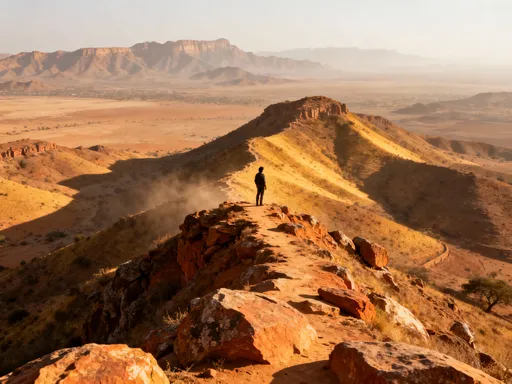
Travelers arriving in Jaipur from Delhi often expect a gradual transition into Rajasthan’s famed pink city, but few are prepared for the dramatic shift in terrain that unfolds along the highway. As the flat plains of northern India give way to undulating rocky hills, the landscape begins to tell a story far older than any palace or fort. Around 180 kilometers from Delhi, the first hints of the Aravalli Range emerge—weathered ridges cloaked in sparse vegetation, their jagged silhouettes cutting across the horizon. This is not the lush greenery associated with other Indian cities; this is a land shaped by millennia of erosion, drought, and tectonic endurance.
The visual contrast between the vibrant cityscape and its stark surroundings is striking. Jaipur’s iconic pink walls and ornate gateways stand in vivid juxtaposition against a backdrop of ochre and rust-colored earth. The city rises not from fertile plains but from rocky plateaus, its foundations literally built upon ancient stone. Early visitors often remark on how the city seems to grow out of the land rather than sit upon it, as if architecture and geology are in constant dialogue. This rugged terrain is not merely scenic—it has dictated where buildings could be erected, where water could be stored, and how communities could thrive.
Geologically, Jaipur lies within the Aravalli Range, one of the oldest mountain systems on Earth, with rock formations dating back over 1.8 billion years. These ancient hills, composed primarily of metamorphic and igneous rock, create a natural fortress around the city. Their elevation changes—ranging from 300 to over 900 meters above sea level—have historically provided strategic advantages, offering panoramic views and natural defense. Even today, driving through the outskirts, one can see how roads curve around massive boulders, and residential areas climb steep inclines, adapting to the land rather than flattening it.
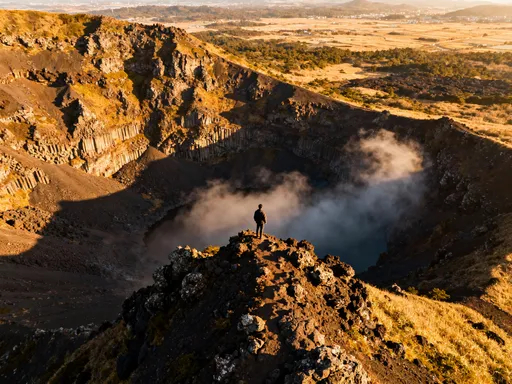
First impressions of Jaipur’s topography often include surprise at the sheer presence of exposed rock. Unlike cities built on alluvial soil, Jaipur’s ground is frequently littered with granite and quartzite outcrops, some smoothed by centuries of wind and rain, others fractured and sharp. These natural fortifications once protected kingdoms, and now they define the character of the region. For modern visitors, this ruggedness is not an obstacle but an invitation—a chance to look beyond the curated heritage sites and witness the primal forces that shaped Rajasthan’s capital.
Beyond the Pink: How Terrain Shaped Jaipur’s Architecture
While Jaipur is celebrated for its harmonious urban design and Mughal-influenced aesthetics, the city’s architecture is equally a response to its challenging terrain. The placement of forts like Amber and Nahargarh on elevated hilltops was not merely symbolic—it was a necessity. These commanding positions offered military advantage, allowing sentries to spot approaching armies from miles away. The steep, rocky slopes made direct assaults difficult, turning natural geography into a defensive asset. Even today, ascending to Amber Fort on foot or elephant-back reveals how the terrain dictated access routes, with narrow, winding paths designed to slow down invaders.
The materials used in construction further reflect the intimate relationship between Jaipur’s buildings and its land. Local sandstone, quarried from nearby hills, gives the city its distinctive pink hue, a color later formalized under Maharaja Ram Singh II in 1876 to welcome the Prince of Wales. This stone is not only abundant but also well-suited to the climate—its porous nature helps regulate indoor temperatures, keeping interiors cool during scorching summers. Marble, sourced from regions like Makrana, was reserved for sacred spaces and royal chambers, its luminous quality contrasting with the earth-toned surroundings.
One of the most ingenious architectural responses to the arid landscape is the stepwell. Structures such as Panna Miyan ki Baori and Anokhi Museum’s restored stepwell were not decorative but functional, designed to access groundwater in a region where rainfall is erratic. These subterranean reservoirs, often descending dozens of feet, provided water for drinking, bathing, and irrigation. Their intricate staircases, shaded alcoves, and cool microclimates made them social hubs as well. In a city where water is precious, these stepwells stand as testaments to human ingenuity in adapting to environmental constraints.
Urban planning in Jaipur also reveals the influence of topography. Though the walled city follows a grid pattern based on Vastu Shastra, the placement of outer palaces and temples was adjusted to accommodate natural slopes and rocky foundations. Roads in areas like Malviya Nagar and Vaishali Nagar follow the contours of the land, avoiding costly excavation. Even modern construction faces limitations—developers must work around existing boulders, sometimes incorporating them into garden designs or leaving them as natural landmarks. This ongoing negotiation between human ambition and geological reality continues to shape how Jaipur grows.
The Aravalli Range: Jaipur’s Silent Backbone
The Aravalli Range, stretching over 690 kilometers from Gujarat to Delhi, forms the geological spine of Rajasthan and serves as Jaipur’s silent protector. These ancient mountains, believed to be among the oldest fold mountain systems in the world, predate the Himalayas by hundreds of millions of years. Their weathered peaks and eroded ridges tell a story of tectonic collision, uplift, and relentless weathering. Though no longer towering, the Aravallis play a crucial role in shaping Jaipur’s climate, hydrology, and biodiversity. They act as a natural barrier, intercepting monsoon winds and influencing rainfall distribution across the region.
Much of Jaipur is nestled within or adjacent to this range, benefiting from the microclimates it creates. The hills provide shade, reduce wind speed, and help retain moisture in the soil, allowing certain pockets of vegetation to flourish despite the arid conditions. Forested areas like the Nahargarh Biological Park and the Jhalana Reserve rely on this ecological stability. Species such as the Indian leopard, striped hyena, and various migratory birds find refuge in these wooded slopes, which serve as vital green lungs for the expanding city.
Yet the Aravallis face growing threats. Decades of illegal mining have scarred large sections of the range, particularly in areas like Gurgaon and Alwar, just beyond Jaipur’s borders. The extraction of quartzite, marble, and sand has led to deforestation, habitat fragmentation, and increased air pollution. Urban sprawl is another pressing concern—as Jaipur expands, residential and commercial projects encroach upon protected zones, often violating environmental regulations. In response, conservationists and local authorities have designated parts of the Aravallis as eco-sensitive zones, restricting construction and promoting reforestation.
For visitors, there are still meaningful ways to experience the Aravallis. Hiking trails near Moti Dungari offer accessible routes through rocky terrain, with views of the city and surrounding hills. Further north, near Jamwa Ramgarh, more remote paths wind through scrubland and seasonal streams, ideal for nature walks and birdwatching. Guided eco-tours led by local naturalists provide insight into the region’s geology, flora, and conservation efforts. These experiences remind us that the Aravallis are not just a backdrop but a living system that sustains life in one of India’s fastest-growing cities.
Desert Edges: Where the Thar Begins to Whisper
Jaipur sits on the eastern fringe of the Thar Desert, a vast arid region that spans parts of Rajasthan and extends into Pakistan. This positioning places the city in a transitional zone—not fully desert, but deeply influenced by its dry, hot climate. The land here bears the marks of desertification: sparse tree cover, cracked soil, and hardy vegetation adapted to long dry spells. Yet this environment supports a surprising variety of life, shaped by resilience and adaptation. Understanding Jaipur’s semi-arid reality offers insight into how its people have learned to live in harmony with a demanding landscape.
Native flora such as the khejri tree (Prosopis cineraria) play a vital role in stabilizing the soil and providing shade. Revered in local culture and considered sacred by some communities, the khejri can survive for decades with minimal water, its deep roots tapping into underground moisture. Other drought-resistant plants like neem, babool, and aloe vera are commonly found in rural areas and home gardens. Wildlife, too, has adapted to these conditions. The desert fox, with its large ears for heat dissipation, roams the outskirts at dusk. Spiny-tailed lizards bask on sun-warmed rocks, while peafowl and partridges navigate the scrubland in search of food.
Agriculture in the region reflects centuries of adaptation. Farmers practice terraced farming on gentle slopes to prevent soil erosion and maximize water retention. Crops like millet, barley, and guar (cluster beans) are favored for their low water requirements. Traditional methods such as rainwater harvesting and crop rotation remain in use, preserving soil fertility. In recent years, government-supported initiatives have promoted drip irrigation and drought-resistant seed varieties, helping rural communities cope with increasingly unpredictable monsoons.
Water management is central to daily life in and around Jaipur. Many households still rely on rooftop rainwater harvesting systems, channeling monsoon runoff into underground tanks. Public awareness campaigns encourage water conservation, especially during summer months when reservoirs run low. The city’s location on the desert edge means that every drop counts—a reality that shapes everything from urban planning to domestic routines. This awareness fosters a deep respect for natural resources, one that visitors can observe in the careful stewardship of gardens, temples, and village commons.
Hidden Terrains: Offbeat Spots That Reveal the Land’s Soul
Beyond the well-trodden tourist circuits lie lesser-known corners of Jaipur that reveal the true character of its terrain. One such place is a small temple nestled among boulders near Chaugan, a quiet sports ground on the city’s outskirts. Tucked between massive granite formations, this centuries-old shrine blends seamlessly into the landscape, its stone walls matching the color and texture of the surrounding rock. Locals visit for morning prayers, leaving offerings of flowers and incense. There are no entry fees, no crowds—just the sound of wind brushing through dry grass and the occasional call of a peacock.
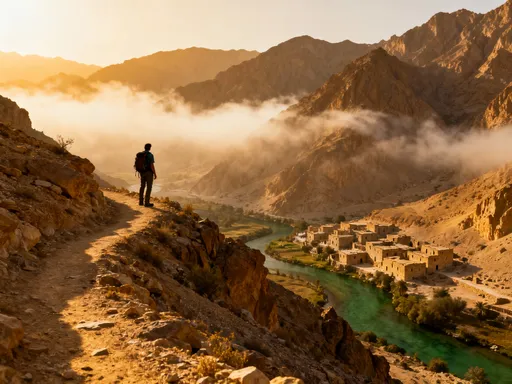
Another hidden gem is the plateau near Jamwa Ramgarh, about 25 kilometers northeast of the city center. This elevated stretch offers panoramic views of the Thar Desert’s edge, where flat, sandy plains meet rocky hills. At sunrise, the light paints the land in golden hues, highlighting the textures of cracked earth and scattered shrubs. It’s a favorite spot for photographers and meditators alike, offering solitude and a profound sense of connection to the earth. Few tourists make it here, but those who do are rewarded with an unfiltered experience of Rajasthan’s raw beauty.
Seasonal streams, known locally as nallahs, come alive during the monsoon, transforming dry riverbeds into rushing channels. These ephemeral waterways, such as the one near Sisodia Rani Garden, support temporary wetlands that attract birds and amphibians. After the rains, the land blooms with wildflowers, turning barren stretches into carpets of color. These fleeting transformations remind us of nature’s cyclical rhythms and the importance of seasonal awareness in a water-scarce region.
Village trails around Dhawadi and Biramani offer another way to engage with the land. Walking through these rural paths, visitors see how people coexist with the terrain—goats grazing on thorny bushes, women collecting firewood, farmers tending small plots between rocks. Stone walls outline fields, built without mortar, using techniques passed down for generations. These communities live in balance with the environment, respecting its limits and drawing sustenance from its gifts. Such encounters provide a humbling contrast to the grandeur of palaces, reminding us that true resilience lies in simplicity and adaptation.
Experiencing the Land: Activities Rooted in the Terrain
To truly appreciate Jaipur’s rugged beauty, one must engage with it physically and mindfully. Jeep safaris through the rocky scrubland of Jhalana or near Nahargarh offer more than adventure—they provide geological and ecological insight. Local guides point out rock formations, explain soil types, and identify animal tracks, turning a casual ride into an educational journey. These safaris often include stops at vantage points where passengers can step out and feel the wind, smell the dry earth, and listen to the silence that stretches across the hills.
Sunrise treks in reserved forest areas, such as those organized by eco-tourism groups in the Aravallis, allow visitors to experience the landscape at its most serene. Starting before dawn, these guided walks follow marked trails through dry deciduous forests, with naturalists explaining the region’s biodiversity. The early light enhances visibility of wildlife, and the cooler temperatures make hiking comfortable. Participants are encouraged to move quietly, observe without disturbing, and leave no trace—principles that align with sustainable tourism.
Camel and horse rides, typically associated with the Thar Desert, are also available on Jaipur’s outskirts, particularly in open, flat areas near Sambhar Lake or in designated desert parks. These rides offer a slower, more reflective way to experience the terrain, allowing riders to absorb the vastness of the landscape. Unlike commercial rides in crowded areas, eco-conscious operators prioritize animal welfare, limit group sizes, and avoid sensitive habitats.
For photographers, Jaipur’s arid terrain presents endless opportunities to capture texture, light, and shadow. The best times are early morning and late afternoon, when the sun casts long shadows across rocky surfaces. Wide-angle lenses emphasize the scale of the land, while macro settings reveal the intricate patterns of lichen on stone or the delicate structure of desert blooms. Local photography tours often include lessons on ethical practices, such as avoiding trampling vegetation and respecting private property. Through these activities, visitors don’t just see Jaipur’s ruggedness—they feel it, understand it, and learn to respect it.
Why This Matters: Respecting and Preserving Jaipur’s Natural Identity
As Jaipur continues to grow as a tourist destination, the pressure on its fragile ecosystems intensifies. Increased footfall at natural sites, unchecked construction in ecologically sensitive zones, and rising waste generation threaten the very landscapes that draw visitors. The rocky hills, dry riverbeds, and scrub forests that define the region are not indestructible—they are vulnerable to disruption. Once damaged, these slow-growing ecosystems can take decades to recover, if at all. This makes sustainable travel choices not just ideal but essential.
Visitors can make a difference by choosing responsible tour operators, avoiding littering, and staying on marked trails. Simple actions—carrying reusable water bottles, refraining from carving names on rocks, and respecting wildlife boundaries—collectively contribute to conservation. Supporting community-led initiatives, such as village homestays or guided nature walks, ensures that local people benefit directly from tourism while maintaining stewardship over their land.
Several grassroots efforts are already making an impact. In areas like Dhawadi and Moti Dungari, resident groups have launched tree-planting drives and clean-up campaigns. Schools organize environmental education programs, teaching children about the Aravallis’ importance. Some temples and heritage sites have adopted solar power and rainwater harvesting, setting examples for sustainable practice. These efforts, though small in scale, reflect a growing awareness that Jaipur’s identity is not just cultural but ecological.
In the end, seeing Jaipur as more than a heritage city—as a living, breathing landscape shaped by time, climate, and resilience—transforms how we experience it. The pink walls and royal courts are undeniably magnificent, but the true soul of Jaipur lies beneath its surface, in the ancient stone, the whispering winds, and the quiet strength of its people. To honor this city is to honor its land—to walk gently, listen closely, and leave only footprints. In doing so, we ensure that its rugged beauty endures for generations to come.