Beyond the Mirror: Uyuni’s Hidden Cultural Soul
You know what? Everyone talks about Bolivia’s Salar de Uyuni as this surreal, endless mirror. But what no one tells you is the real magic lies beneath the surface—in the quiet villages, ancient traditions, and warm Quechua and Aymara communities. I didn’t expect to be so moved by something so vast and so human at the same time. This isn’t just a photogenic wonderland; it’s a living cultural landscape. Let me take you where the guidebooks rarely go, beyond the reflective glare, into the heart of the Altiplano, where centuries-old ways of life endure with quiet dignity. Here, the land does not merely dazzle the eye—it speaks to the soul.
The Illusion of the Infinite: What Most Travelers See
The Salar de Uyuni is often described in near-mythical terms: a blinding white expanse that stretches to the horizon, transforming into a celestial mirror during the rainy season when a thin layer of water creates a flawless reflection of the sky. Covering more than 10,000 square kilometers, it is the largest salt flat in the world, formed over millennia from the evaporation of prehistoric lakes such as Lake Minchin and Lake Tauca. Its stark, otherworldly beauty has made it a magnet for photographers, influencers, and curious travelers from across the globe. Each year, tens of thousands visit between December and March, hoping to capture that perfect shot where the sky meets the earth in seamless continuity.
Yet, for all its visual power, the mirror effect is fleeting—dependent on seasonal rains and precise conditions. And while the spectacle is undeniably breathtaking, it often becomes the sole focus of the journey, reducing one of South America’s most culturally rich regions to a single, Instagrammable moment. Many tours rush visitors from Uyuni town to the salt flats with little context, offering photo stops at Incahuasi Island or the salt hotel without pausing to explain who has lived here, how they survive, or what this land means to them. The vastness can be overwhelming, but without understanding, it risks feeling empty—an aesthetic triumph with little emotional depth.
The danger lies in treating the Salar as a backdrop rather than a homeland. The Quechua and Aymara peoples have inhabited this high-altitude desert for generations, long before tourism arrived. Their connection to the land is not visual but spiritual, practical, and interwoven with daily survival. When travelers focus only on the mirror, they miss the deeper reflection: a resilient culture shaped by altitude, isolation, and ancestral knowledge. Recognizing this shift—from scenery to story—is the first step toward a more meaningful journey.
Stepping Off the Beaten Path: Discovering the Altiplano Communities
Beyond the salt flats lie small, often overlooked villages where life unfolds at a different pace. Colchani, a modest settlement on the edge of the Salar, is one of the few places where salt harvesting is still done entirely by hand. Here, families rise before dawn, using simple tools to cut salt blocks from the crust, then stack them to dry under the Andean sun. The work is slow, physical, and passed down through generations. Visitors who stop to watch often do so from a distance, but those who take the time to speak with locals discover a quiet pride in craftsmanship and self-reliance.
Further inland, towns like Tahua and San Juan offer a glimpse into highland life at over 3,600 meters above sea level. Adobe homes with corrugated metal roofs dot the landscape, warmed by fires fueled by dried llama dung. Children walk to school in traditional dress—colorful woven skirts for girls, bowler hats perched atop braids. Markets bustle once a week, where farmers trade potatoes, quinoa, and wool. These are not staged performances but the rhythms of real life, sustained by community cooperation and adaptation to a harsh environment.
One of the most memorable experiences for travelers who venture off the standard route is sharing a meal or drink with a local family. *Api*, a thick, warm beverage made from purple corn, is often served with *buñuelos*—sweet fried dough—on cold mornings. Sitting in a low-ceilinged kitchen, listening to stories in broken Spanish or gestures, creates a connection no photograph can capture. These moments reveal a generosity of spirit that flourishes despite material scarcity. The Altiplano does not give easily, but its people offer freely.
Staying overnight in a community-run *refugio*—a simple guesthouse built from salt blocks—adds another layer of immersion. Without electricity or running water, these accommodations remind visitors of the realities of life here. Yet they also provide warmth, both literal and emotional. It is in these quiet hours, under a sky ablaze with stars unseen in light-polluted cities, that the true scale of the landscape—and the resilience of its people—becomes clear.
Voices of the Andes: Language, Tradition, and Identity
The cultural heart of the Altiplano beats strongest in its languages and oral traditions. Quechua and Aymara, both ancient Andean tongues, remain widely spoken in rural communities. Unlike Spanish, which was imposed during colonial times, these languages carry the worldview of people who have lived in harmony with the mountains for centuries. Elders often recount myths of creation, animal spirits, and the wisdom of ancestors, not as folklore but as living knowledge. Storytelling is not entertainment—it is education, preservation, and prayer.
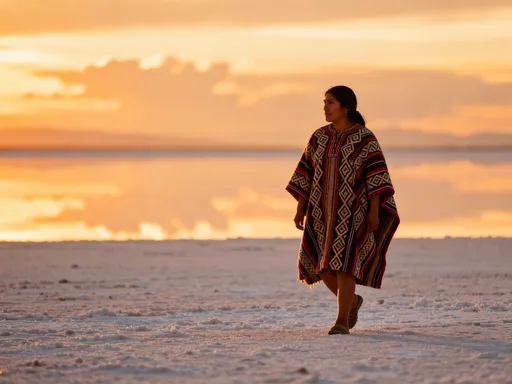
Traditional clothing, too, speaks volumes. Women wear layered polleras (pleated skirts), colorful shawls called *manta*, and the iconic bowler hats, said to have originated from a shipment of European hats mistakenly delivered in the 1920s. Each garment is handwoven, often with patterns that signify a family’s origin, marital status, or spiritual beliefs. The intricate designs are not merely decorative; they are a form of identity written in thread. In communities like Coquesa or Ancocala, weaving is still done on backstrap looms, using natural dyes from plants and minerals.
Spirituality is deeply interwoven with daily life, centered on the reverence for Pachamama, or Mother Earth. Before planting, building, or traveling, it is common to offer a *ch’alla*—a ritual blessing involving coca leaves, alcohol, and prayers. These offerings are not theatrical; they are acts of reciprocity, acknowledging that humans depend on the land and must give back. Community guides often explain that disrespecting nature—littering, shouting, or taking stones without permission—can bring misfortune, not as superstition but as a moral code.
Efforts to preserve these traditions are growing. Local schools now teach in both Spanish and indigenous languages, and cultural festivals celebrate music, dance, and ancestral farming techniques. Yet globalization and migration threaten continuity, especially among younger generations who move to cities for work. The challenge is not just to keep traditions alive but to ensure they are valued, not exoticized. When travelers listen with respect, they become part of this preservation, not just observers.
Rituals and Rhythms: Seasonal Life on the Salt Flat
Life in the Altiplano follows the seasons with precision. The rainy season, from December to March, transforms the Salar into a mirror, but it also brings challenges—flooded roads, delayed travel, and limited access to remote villages. For locals, this time is not for tourism but for rest, family gatherings, and spiritual reflection. The dry season, from April to November, is when the real work begins. Salt harvesting resumes, llamas are sheared for wool, and families prepare for the agricultural cycle.
One of the most important events is the Alasitas fair, held every January in nearby towns. Rooted in Aymara tradition, the festival honors Ekeko, the god of abundance. People buy miniature versions of homes, cars, and money, believing that carrying them brings prosperity. These tiny replicas are blessed by *yatiris* (spiritual guides) and kept in homes or workplaces. Unlike commercialized holidays, Alasitas is deeply personal, reflecting hopes and dreams in tangible form.
Another key celebration is the Fiesta de la Candelaria, which blends Catholic and indigenous beliefs. In communities like Uyuni and Potosí, dancers in elaborate costumes perform for hours, honoring the Virgin of Candelaria with synchronized steps and traditional music. The costumes, often weighing over 20 kilograms, depict historical and mythological figures. These dances are not performances for tourists but acts of devotion, passed down through family lineages. Participation is a point of honor, requiring months of preparation and physical endurance.
Communal labor, known as *minka*, is another cornerstone of Altiplano life. When a family builds a home or harvests crops, neighbors gather to help without payment. In return, the host provides food and drink. This system of reciprocity strengthens social bonds and ensures survival in a land where individualism is a luxury. Travelers who witness a *minka* gain insight into a worldview where community is not a concept but a necessity.
Sustainable Encounters: How to Travel with Respect
As tourism grows, so does the need for ethical practices. The difference between respectful engagement and cultural exploitation often comes down to intention and preparation. Hiring local guides is not just a recommendation—it is essential. These guides offer more than navigation; they provide context, translate languages, and ensure visitors understand local customs. Their knowledge transforms a sightseeing trip into a meaningful exchange.
Staying in community-run *refugios* supports the local economy directly. Unlike large tour companies that funnel profits elsewhere, these small accommodations ensure income stays within the village. Meals are often prepared by local women, using traditional recipes and ingredients grown in family gardens. This model of tourism fosters dignity, not dependency.
Photography requires particular sensitivity. While capturing memories is natural, photographing people without permission—especially elders or children—can feel invasive. A simple gesture, a smile, or a question in basic Spanish goes a long way. Many locals are happy to pose if asked, and some may even share a story in return. The key is to treat people as individuals, not props.
Visitors should also be mindful of sacred sites. Certain rock formations, springs, or altars are not tourist attractions but places of worship. Touching, climbing, or removing objects from these areas is deeply disrespectful. Learning a few phrases in Quechua or Aymara—such as *sumaq kausay* (beautiful life) or *jallalla Pachamama* (long live Mother Earth)—shows effort and respect. Small actions, when done with sincerity, build trust.
The Hidden Journeys: Alternative Routes and Local Wisdom
Most tours follow a predictable loop: Uyuni to Incahuasi Island, the salt hotel, and a few lagoons before returning. But alternative routes, led by Indigenous-owned cooperatives, offer a richer, slower experience. Trekking to lesser-known lagoons like Honda or Cañapa with a local guide reveals flamingos, vicuñas, and geysers without the crowds. These journeys often include overnight stays in remote cabins, where the silence is broken only by wind and distant animal calls.
Some travelers participate in salt-carving workshops, learning how artisans shape salt into sculptures, tableware, or decorative items. These sessions are not demonstrations but apprenticeships, requiring patience and attention. The salt, though abundant, is treated with care—each block a product of nature and human effort. Similarly, weaving demonstrations in villages like Tahua allow visitors to try backstrap loom techniques under the guidance of master weavers.
Slow travel also means adjusting expectations. Roads may be unpaved, meals simple, and communication limited. But these conditions foster presence—being fully in the moment, away from digital distractions. It is in these unplanned pauses—sharing coca leaves with a shepherd, watching women spin wool by firelight—that the deepest connections form. The journey becomes less about seeing and more about understanding.
Local wisdom often contradicts conventional travel logic. Where tourists seek comfort, locals value resilience. Where visitors want speed, communities value patience. Embracing this mindset shift is the essence of cultural immersion. It requires humility—the willingness to listen more than speak, to learn rather than assume.
Carrying the Memory: Why Culture Outlasts the Photo
The mirror effect at Salar de Uyuni will fade from your camera roll, as all images do. But the memory of a grandmother’s hands shaping salt, a child’s laughter in a Quechua song, or the warmth of *api* on a freezing morning—these linger. They become part of who you are, shaping how you see the world long after you’ve returned home.
Tourism has the power to uplift or erode. When done with care, it supports cultural preservation, empowers communities, and broadens understanding. When done carelessly, it reduces living traditions to photo ops and commodifies sacred practices. The choice lies with the traveler. Will you seek only the reflection, or will you look deeper?
The true wonder of Uyuni is not its ability to mirror the sky, but its ability to reflect humanity—its resilience, creativity, and enduring spirit. To honor this place is to honor its people, their language, their rituals, their quiet strength. It is to travel not as a consumer, but as a guest.
So the next time you see a photo of the salt flats, ask yourself: what lies beyond the mirror? Who lives there? What do they believe? What do they protect? And how can you visit in a way that gives back, not just takes? The answers may transform not just your journey, but your heart. Because the most beautiful landscapes are not just seen—they are felt, remembered, and respected.