This Is Not What I Expected When I Went Shopping at Namibia’s Skeleton Coast
You know what? I didn’t go to the Skeleton Coast for shopping—I went for the shipwrecks, the wild dunes, and that eerie silence. But somehow, I ended up “shopping” in the most unexpected way: collecting memories, textures, and stories from one of Earth’s rawest landscapes. There’s no mall here, no souvenir stands—just nature’s own display. And honestly? This place sells vibes you can’t find anywhere else. Let me tell you how scenic spots became my ultimate treasure hunt.
Arrival at the Edge of the World
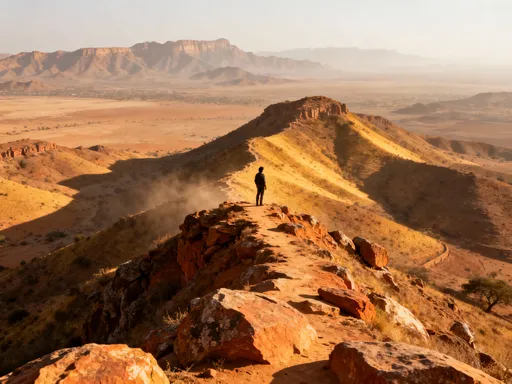
Driving north along Namibia’s Atlantic coast, the landscape begins to shift in subtle but profound ways. The sparse savannah gives way to endless stretches of sand, bleached silver by the sun and sculpted by relentless winds. Then, without warning, a thick bank of fog rolls in from the ocean, swallowing the horizon and wrapping the desert in a cool, damp shroud. This is the first sign that you’ve entered a realm apart—one where the elements rule and human presence is fleeting. The Skeleton Coast, stretching over 500 kilometers along Namibia’s northern shoreline, is not a destination for the faint of heart. It is remote, unforgiving, and breathtakingly beautiful in its desolation.
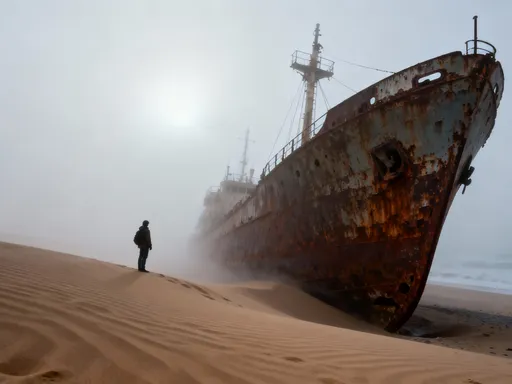
The name itself speaks of danger and mystery. Early Portuguese sailors called it “The Gates of Hell,” and with good reason. Countless ships have been wrecked on its hidden sandbars, lured by mirages or caught in sudden storms. Today, the rusted hulks of these vessels lie half-buried in the dunes, like the bones of long-dead sea creatures. The air carries a sharp tang of salt and decay, and the wind whispers through the wreckage with a voice that feels ancient. There are no crowds, no guided tours with megaphones—just silence, broken only by the crash of waves and the occasional cry of a gull.
It’s in this stillness that the idea of “shopping” takes on a new meaning. There’s nothing to buy here, no trinkets or t-shirts emblazoned with slogans. Instead, every sense is invited to browse. The eyes scan the horizon for movement, the ears tune into the rhythm of the surf, the skin feels the chill of the fog and the grit of sand carried on the breeze. What you “take home” isn’t wrapped in a bag—it’s etched into your mind. This coast doesn’t cater to consumers. It speaks to seekers.
The Illusion of Commerce in a Barren Landscape
In a world where travel is often reduced to checklists and Instagram backdrops, the Skeleton Coast resists commodification. There are no ticket booths, no gift shops, no QR codes linking to audio tours. The experience is unmediated, raw, and entirely self-directed. And yet, there is a kind of commerce happening—one not measured in currency, but in attention. Every moment spent here feels like a transaction: you offer your time, your presence, your openness, and in return, the landscape reveals its secrets.
Think of it as nature’s curated exhibition. The dunes are the galleries, the shipwrecks the artifacts, the seal colonies the living installations. Instead of walking past mannequins in a department store, you’re moving through a dynamic, ever-changing environment where the displays are governed by tides, wind, and time. A driftwood log becomes a sculpture. A fog bank transforms into a curtain of mystery. The light at dawn turns rusted metal into golden relics. These are not static objects behind glass—they are part of a living, breathing system that demands respect and rewards patience.
This kind of “shopping” requires a shift in mindset. It’s not about acquisition, but absorption. You don’t leave with a bag full of souvenirs, but with a mind full of images, a heart full of awe. It’s a reminder that some of the most valuable things in life cannot be owned—only witnessed. And in that witnessing, there is a kind of richness that no retail therapy can match. The Skeleton Coast doesn’t sell products. It offers presence.
Scenic Spot #1: Cape Cross and the Seal Colony
One of the first stops along this remote stretch is Cape Cross, a windswept peninsula that pulses with life in the most unexpected way. Here, on a narrow strip of rocky shore, lies one of the largest colonies of Cape fur seals in the world. Numbers fluctuate, but at peak times, more than 100,000 seals can be seen basking on the rocks, nursing their pups, or jostling for space in the surf. The noise is overwhelming—a cacophony of barks, grunts, and squeals that echoes across the water. The smell, too, is unforgettable: a pungent mix of salt, fish, and damp fur that clings to your clothes long after you’ve left.
Yet, for all its sensory intensity, there is a strange beauty in the chaos. Watching a mother nuzzle her pup, or a group of juveniles tumbling playfully in the shallows, feels like stumbling upon a natural theater. There are no scripts, no rehearsals—just the raw, unfiltered drama of survival and connection. This is not a zoo exhibit or a staged performance. It’s real, messy, and deeply moving.
The “souvenir” from Cape Cross isn’t something you can hold in your hand. It’s the image of a tiny seal pup wobbling on unsteady flippers, the sound of waves crashing behind a chorus of barks, the warmth of the sun breaking through the fog as a bull seal asserts his dominance with a thunderous roar. These moments don’t come with price tags, but they carry lasting value. They remind us that life, in all its noisy, smelly, chaotic glory, is worth paying attention to. And sometimes, the most precious things are the ones that can’t be packed into a suitcase.
Scenic Spot #2: The Shipwrecks of Conception Island
Few sights on the Skeleton Coast are as haunting as the shipwrecks that litter its shores. Among the most famous is the Eduard Bohlen, a German cargo steamer that ran aground in 1909. Once stranded on what was then the beach, the ship now lies half-buried in sand, over a kilometer inland—a testament to the relentless movement of the dunes. Its rusted hull juts from the desert like a fossil, its ribs exposed to the elements, slowly being consumed by time and corrosion. Nearby, the Zodiac, wrecked in 1946, lies in even more dramatic fashion, its bow pointing skyward as if pleading for rescue that never came.
Walking among these wrecks is like touring an open-air museum of human ambition and nature’s indifference. Each vessel tells a story of hope, miscalculation, and ultimately, surrender. The Eduard Bohlen was en route to transport railway supplies when it was swallowed by fog and driven off course. The crew survived, but the ship was lost—now a monument to the coast’s treacherous reputation. Light plays across the metal in surprising ways: at sunrise, the rust glows amber; at midday, shadows deepen in the crevices; at dusk, the whole structure seems to dissolve into the haze.
These wrecks are not preserved behind ropes or plaques. They are left to decay on their own terms, becoming part of the landscape rather than fighting against it. In this, they take on a kind of dignity. They are no longer symbols of failure, but of integration—of human creation returning to the earth. To stand beside them is to feel small, humbled, and strangely comforted. The “items” on display here are not for sale, but they offer something more valuable: perspective. They remind us that all things pass, that nature endures, and that even in ruin, there is beauty.
Scenic Spot #3: The Fog-Drenched Dunes of Swakopmund’s Outskirts
As you approach the southern edge of the Skeleton Coast near Swakopmund, the desert takes on a different character. Here, the Namib Desert meets the Atlantic Ocean in a surreal convergence of sand and sea. Towering dunes rise directly from the shoreline, their crests sculpted by wind into sharp ridges and soft curves. But what makes this landscape truly otherworldly is the fog—a near-constant presence that rolls in from the cold Benguela Current, wrapping the dunes in a ghostly veil.
Walking through these fog-drenched dunes is a lesson in sensory recalibration. Visibility shrinks to just a few meters. Sounds become muffled, distorted. The sand, damp with moisture, holds your footprints for a moment before the wind erases them. There is no music, no chatter, no distractions. Just the rhythm of your breath and the occasional creak of shifting sand. In this stillness, the mind begins to slow down, to open up. It’s as if the fog isn’t just outside, but within—clearing mental clutter, inviting introspection.
This is where the idea of “emotional purchase” becomes most vivid. You don’t buy peace in a store, but you can “acquire” it here, simply by being present. The dunes offer solitude, not as emptiness, but as fullness—a space to listen, to reflect, to reconnect with yourself. Occasionally, you’ll come across fragments of driftwood, bleached white and smoothed by the sea, or the bleached bones of a long-dead animal. These are not morbid reminders, but markers of a cycle that continues without pause. In this environment, time feels different—slower, deeper, more meaningful. The real “takeaway” from this place isn’t a photo or a shell. It’s a shift in awareness, a quiet knowing that you are part of something vast and ancient.
Local Crafts and Ethical Exchanges Near the Coast
While the Skeleton Coast itself remains untouched by commercialism, nearby towns like Swakopmund and Henties Bay offer small opportunities for ethical engagement with local culture. Along quiet streets and modest markets, artisans sell handmade crafts that reflect the region’s natural beauty and sustainability values. These are not mass-produced souvenirs, but carefully crafted items made from recycled ocean materials—driftwood carved into sculptures, glass bottles melted into jewelry, textiles woven from wool sourced from farms that follow humane practices.
What stands out is the intention behind these creations. Many artisans work with materials reclaimed from the sea—plastic waste, abandoned nets, weathered wood—transforming pollution into art. A necklace might be made from sea glass polished by waves; a wall hanging from fragments of fishing buoys. These pieces carry stories of resilience and renewal, much like the landscape itself. Purchasing them isn’t about indulgence, but about participation—supporting local livelihoods while honoring the environment.
Even the wool products, such as scarves or blankets, are made from fibers that come from farms committed to animal welfare and sustainable land use. There is no exploitation of the seal populations—strict regulations protect these animals, and ethical guidelines ensure that no wildlife is harmed for craft production. The message is clear: commerce, when done with care, can coexist with conservation. These small exchanges are not the main event of the journey, but they offer a meaningful way to carry a piece of the coast home—responsibly, respectfully, and with purpose.
Why This Kind of “Shopping” Changes You
In an age of instant gratification and endless consumption, the Skeleton Coast offers a different kind of fulfillment—one rooted in experience rather than ownership. What you “collect” here isn’t displayed on a shelf, but stored in your memory: the silence of the dunes, the roar of the seal colony, the ghostly presence of the shipwrecks. These moments don’t depreciate. They deepen with time, gaining meaning as life unfolds around them.
There’s a growing movement toward experiential travel—a shift away from buying things and toward becoming someone different through journeying. The Skeleton Coast embodies this philosophy. It doesn’t cater to tourists who want to take; it rewards travelers who are willing to receive. It asks you to slow down, to listen, to be present. And in doing so, it changes your relationship with value. You begin to see that the most precious things—peace, awe, connection—are not commodities. They are gifts, freely given by the world to those who pay attention.
This kind of travel also fosters a deeper respect for nature. When you witness landscapes that exist on their own terms, untouched by human design, you develop a sense of humility. You realize that you are a guest, not an owner. And that awareness can ripple outward, influencing how you live, consume, and care for the planet long after the trip ends. The Skeleton Coast doesn’t sell souvenirs. It sells transformation.
In the end, the real treasure isn’t something you can wrap or ship. It’s the quiet confidence that comes from standing at the edge of the world and feeling, for a moment, completely alive. It’s the understanding that you don’t need to possess beauty to be changed by it. You only need to be there, open-hearted and willing to see.
The Skeleton Coast teaches us to redefine what it means to “take something home.” It’s not about what fits in a suitcase, but what fits in your soul. So the next time you plan a trip, ask yourself: Do I want to shop? Or do I want to be seen, to be moved, to be reshaped by the wild? Because some of the best things in life aren’t for sale—they’re waiting, free and untamed, on the edges of the map.